


Portable Rocking Chair
Portable Rocking Chair
🌟Carry it one-handed. Anywhere
🌟Four angles, one chair
🌟Comfort you'll actually stay in


Couldn't load pickup availability

Portable Rocking Chair
100% Money-Back Guarantee
100% Money-Back Guarantee
Shop with total confidence. We offer a 30-day money-back guarantee — not happy with your order? Send it back within 30 days for a full refund, no questions asked. Straightforward, simple, and completely risk-free.
How Do I Reach Customer Support?
How Do I Reach Customer Support?
We're here whenever you need us. Get in touch at support@cartlywise.com or through the contact form on our website — our team is standing by and will respond promptly to help you out.
About us
About us
At cartlywise, customers come first — always. We offer high-quality products paired with fast, reliable worldwide shipping. With warehouses strategically placed around the globe, we make sure every order reaches you smoothly, safely, and without the wait.


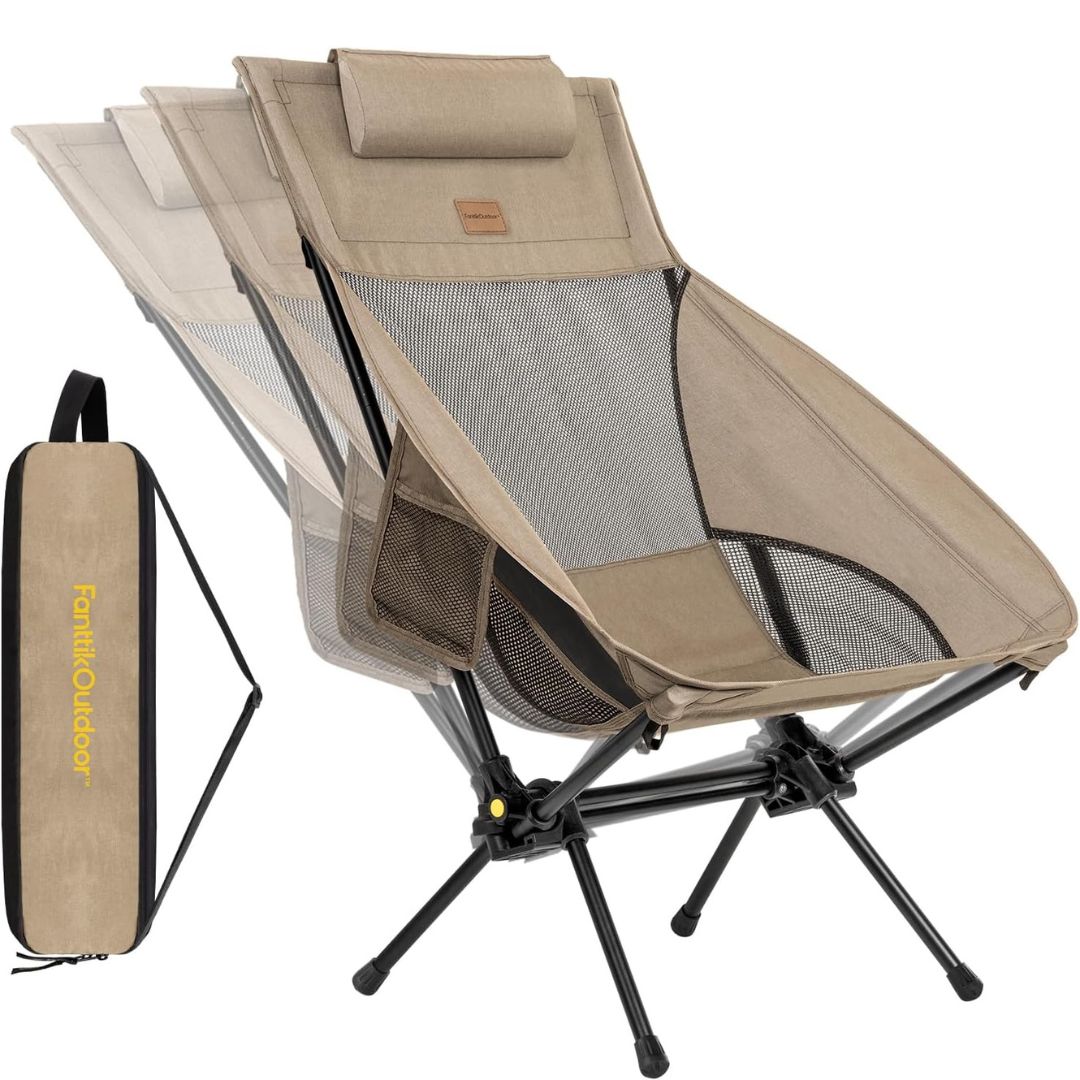

Most camp chairs make you sit. This one lets you settle.
The frame has a gentle 25° tilt built into its geometry, so the chair rocks the way a porch chair does — no springs, no hinges, no lever to find. It weighs 4.5 lb and packs down to about 21 inches, which is the reason it ends up at the far side of the field rather than in the boot.
-
Rocks because of its shape
A free-style frame with a 25° recline. There's no mechanism to wear out because there's no mechanism at all.
-
4.5 lb, and 21 inches packed
Roughly 2 kg in a carry bag that slides into a backpack. Light enough that carrying it is never the reason you left it behind.
-
Aerospace-grade aluminium
7075 alloy poles rather than steel tube — lighter, springier, and rated to hold 250 lb (113 kg).
Four parts doing the work of a recliner.
Set up, it stands 25.2" square and 38.1" tall. There is no locking collar, no ratchet and no tension strap — the recline is in the angle of the poles, which is why it packs into a bag the size of a rolled towel.
7075 aluminium poles
The alloy used for aircraft structures. Stronger by weight than the steel tubing in a standard folding chair, and it flexes instead of bending.
A 25° tilt, unlocked
The frame leans back at a fixed 25° and rocks freely from there. Nothing to adjust, nothing to set — you lean and it follows.

Adjustable head pillow
Slides up and down the back to meet your neck rather than your shoulders. The difference between sitting outside and actually resting outside.
Side pocket and carry bag
Phone, book, drink — within reach without leaving the chair. The bag holds the whole thing at 20.9" × 6.7" × 5.9".
Where people have put it


The chair that goes the last hundred metres.
Heavy chairs stay in the car. This one is light enough and small enough to come with you to the spot you actually chose — which is the whole point of bringing a chair.

Fits in a backpack
Under 21 inches folded and 4.5 lb. It straps to a pack or lies flat in a boot without claiming the whole space.
Sand, grass, gravel, decking
Campsites, beaches, lawns, lakesides, touchlines and festival fields. Anywhere you'd otherwise sit on a coat.
Holds 250 lb
113 kg capacity from aluminium poles rather than steel — the strength is in the alloy, not in the weight.
Rocking, not reclining
The motion is gentle and continuous. It's closer to a rocking chair on a porch than a lounger you crank into position.
Your questions, answered straight
Can I lock it at a fixed angle?
No — and that's deliberate. The frame sits at a fixed 25° recline with no locking mechanism, so it rocks freely the whole time you're in it. If you want a chair that holds one rigid position, this isn't that chair. If you want something that moves with you, it is.
How much weight does it hold?
Up to 250 lb (113 kg). The poles are 7075 aerospace-grade aluminium with reinforced plastic connectors, which is how it carries that load at 4.5 lb rather than the 8–10 lb a steel-framed chair would need.
How small does it pack down?
The carry bag measures 20.9" × 6.7" × 5.9" and the whole thing weighs 4.5 lb. Set up it stands 25.2" × 25.2" × 38.1". It fits inside a daypack or straps to the outside of a larger one.
Is it hard to put together?
The poles clip together in seconds. Stretching the seat cover over the frame takes real hand strength the first few times — the fabric is cut tight on purpose, because that tension is what holds you off the ground. It loosens with use and gets noticeably easier after the first couple of trips.
How should I sit in it?
Keep both feet on the ground while you rock — that's what controls the motion and keeps the base planted. Rock front to back rather than swaying side to side; the frame is built for one axis, and repeated sideways loading over a long session puts strain where it isn't designed to go.
What if it isn't right for me?
Then you get your money back. Every order is covered by our 30-day returns policy — get in touch and we'll sort it out. No hoops, no chasing.
30-day returns
Take it out a few times first
If it doesn't earn its place in the pack, send it back within 30 days and we'll refund you. Here's how the first few trips usually go.
The cover fights you, then gives
Poles clip together in under a minute. The seat cover is the tight part — work the corners on last and use your body weight rather than your fingers. It's the only genuinely fiddly thing about the chair.
You stop noticing you're outside
Feet flat, lean back, and the 25° frame takes over. The rocking is slower than you expect — less deckchair, more porch. The pillow slides to wherever your neck actually is.
It becomes the default
The cover softens, setup drops to seconds, and at 4.5 lb it stops being a decision. It lives in the boot and comes out for touchlines and beaches as much as for campsites.
Over +10.000 orders
Why our customers love us
-

Over the years, I've destroyed countless cheap folding seats, so I finally decided to invest in aerospace-grade aluminum. You can instantly feel the difference in structural integrity. The joints are solid, the fabric doesn't sag, and it easily handles my 240-pound frame without a single squeak.
-

Packing for a weekend kayak trip requires strict space management, and this collapses down smaller than my rolled-up sleeping bag. It easily tucks into the hull hatch, yet unfolds into a genuinely luxurious reclining chair. The side pocket was perfect for keeping my sunglasses safe while I adjusted the backrest.
-

Assembly took me less than a minute on the very first try, thanks to the intuitive shock-cord pole system. It basically snaps itself together just like a modern tent. Breaking it down is equally fast, which is a massive blessing when you're trying to pack up a campsite in the pouring rain.


